
B2C Shop Connector 1.0 の例
Salesforce Commerce Cloud B2C Shop API 用 Anypoint Connector (B2C Shop コネクタ) のこの例は、次の方法を示しています。
-
Authorize Customer 操作を使用して、Shopper JWT トークンを取得する。
-
Get Customer 操作を使用して、顧客の詳細を表示する。
この例では、B2C Shop コネクタの顧客認証接続プロバイダー設定を使用します。
Authorize Customer フロー
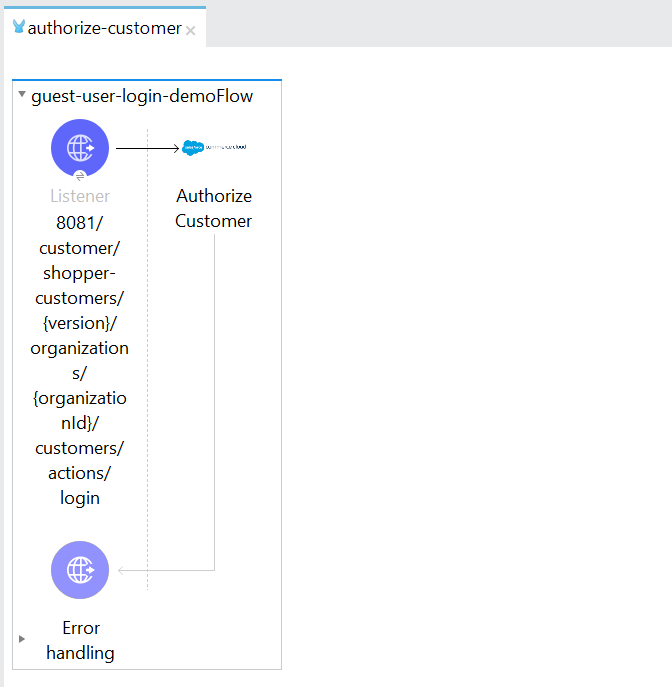
このフローでは、HTTP Listener ソースと Authorize Customer 操作を設定して、Postman から Shopper JWT トークンを取得します。
-
Studio で、[File (ファイル)] > [New (新規)] > [Mule Project (Mule プロジェクト)] を選択します。
-
Mule プロジェクトの名前を入力して、[Finish (完了)] をクリックします。
-
[Mule Palette (Mule パレット)] ビューで、[HTTP] > [Listener] を選択します。
-
[Listener] を Studio キャンバスにドラッグします。
-
[Listener (リスナー)] 設定画面で、必要に応じて [Display Name (表示名)] 項目の値を変更します。
-
[Path (パス)] 項目に「
/customer/shopper-customers/{version}/organizations/{organizationId}/customers/actions/login」を指定します。![[HTTP] の [Listener] の [General (一般)] タブ](_images/shop-connector-authorize-customer-http-listener-config.jpg)
-
[Connector configuration (コネクタ設定)] 項目の横にあるプラス記号 (+) をクリックして、アプリケーション内の HTTP の Listener のすべてのインスタンスで使用できるグローバル要素を設定します。
-
[General (一般)] タブで、[Port (ポート)] に「
8081」を指定します。 -
[Mule Palette (Mule パレット)] ビューで、[Authorize Customer] 操作を選択してフローにドラッグします。
-
Postman から Authorize Customer 操作の必須パラメーターを取得します。
![[Authorize Customer] 操作の [General (一般)] タブ](_images/shop-connector-authorize-customer-body.jpg)
-
[Commerce Cloud B2C Shop Connector (Commerce Cloud B2C Shop コネクタ)] を選択してから、[Mule Palette (Mule パレット)] ビューで [Commerce Cloud B2C Shop Connector Shopper Token Config (Commerce Cloud B2C Shop コネクタの Shopper トークン設定)] 設定を選択し、必要な値で設定します。
![[Commerce Cloud B2C Shop Connector Shopper Token Config (Commerce Cloud B2C Shop コネクタの Shopper トークン設定)] の [General (一般)] タブ](_images/shop-connector-shopper-token-config.jpg)
-
すべての必須パラメーターを入力したら、Mule プロジェクトを保存します。
-
Package Explorer でプロジェクト名を右クリックし、[Run As (別のユーザーとして実行)] > [Mule Application (Mule アプリケーション)] をクリックして、プロジェクトを Mule アプリケーションとして実行します。
-
http://localhost:8081/customer/shopper-customers/{version}/organizations/{organizationId}/customers/actions/login に移動します。 -
Postman を開き、応答でレスポンスヘッダーに JWT トークンがあることを確認します。
この JWT トークンを Postman の認証ヘッダーパラメーターとして使用して、操作を実行できます。
Authorize Customer フローの XML
キャンバスの下部にある [Configuration XML (設定 XML)] タブをクリックし、次の XML コードをコピーして Studio XML エディターに貼り付け、この例のフローを Mule アプリケーションですばやく読み込みます。
<?xml version="1.0" encoding="UTF-8"?>

<mule xmlns:commerce-cloud-shopper-api="http://www.mulesoft.org/schema/mule/commerce-cloud-shopper-api"
	xmlns:http="http://www.mulesoft.org/schema/mule/http"
	xmlns:commerce-cloud-shopperapi="http://www.mulesoft.org/schema/mule/commerce-cloud-shopperapi"
	xmlns="http://www.mulesoft.org/schema/mule/core" xmlns:doc="http://www.mulesoft.org/schema/mule/documentation"
	xmlns:xsi="http://www.w3.org/2001/XMLSchema-instance"
	xsi:schemaLocation="
http://www.mulesoft.org/schema/mule/http http://www.mulesoft.org/schema/mule/http/current/mule-http.xsd http://www.mulesoft.org/schema/mule/core http://www.mulesoft.org/schema/mule/core/current/mule.xsd
http://www.mulesoft.org/schema/mule/commerce-cloud-shopperapi http://www.mulesoft.org/schema/mule/commerce-cloud-shopperapi/current/mule-commerce-cloud-shopperapi.xsd
http://www.mulesoft.org/schema/mule/commerce-cloud-shopper-api http://www.mulesoft.org/schema/mule/commerce-cloud-shopper-api/current/mule-commerce-cloud-shopper-api.xsd">
	<flow name="guest-user-login-demoFlow">
		<http:listener
			doc:name="8081/customer/shopper-customers/{version}/organizations/{organizationId}/customers/actions/login"
			config-ref="HTTP_Listener_config"
			path="/customer/shopper-customers/{version}/organizations/{organizationId}/customers/actions/login"
			allowedMethods="POST">
			<http:response>
				<http:headers><![CDATA[#[output application/java
---
{
"Authorization" : message.attributes.headers.Authorization
}]]]></http:headers>

			</http:response>
			<http:error-response statusCode="#[error.errorMessage.attributes.statusCode]">
				<http:body><![CDATA[#[output text/json --- error.errorMessage.payload]]]></http:body>

			</http:error-response>
		</http:listener>
		<commerce-cloud-shopper-api:create-customer-shopper-customers-organizations-customers-actions-login-by-version-organization-id
			doc:name="Authorize Customer"
			version="#[attributes.uriParams.version]"
			organizationId="#[attributes.uriParams.organizationId]" clientId="#[attributes.queryParams.clientId]"
			siteId="#[attributes.queryParams.siteId]" authorization="#[attributes.headers.Authorization]" config-ref="Commerce_Cloud_B2C_Shop_Connector_Shopper_token"/>

	</flow>
</mule>
Get Customer フロー
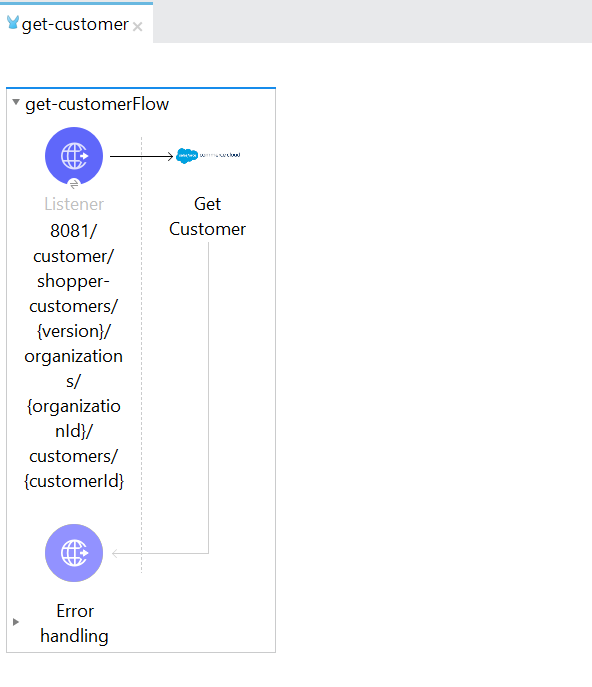
このフローでは、HTTP Listener ソースと GET Customer 操作を設定して、顧客の詳細を取得して表示します。
-
Studio で、[File (ファイル)] > [New (新規)] > [Mule Project (Mule プロジェクト)] を選択します。
-
Mule プロジェクトの名前を入力して、[Finish (完了)] をクリックします。
-
[Mule Palette (Mule パレット)] ビューで、[HTTP] > [Listener] を選択します。
-
[Listener] を Studio キャンバスにドラッグします。
-
[Listener (リスナー)] 設定画面で、必要に応じて [Display Name (表示名)] 項目の値を変更します。
-
[Path (パス)] 項目に「
/customer/shopper-customers/{version}/organizations/{organizationId}/customers/{customerId}」を指定します。![[HTTP] の [Listener] の [General (一般)] タブ](_images/shop-connector-http-listener-config.jpg)
-
[Connector configuration (コネクタ設定)] 項目の横にあるプラス記号 (+) をクリックして、アプリケーション内の HTTP の Listener のすべてのインスタンスで使用できるグローバル要素を設定します。
-
[General (一般)] タブで、[Port (ポート)] に「
8081」を指定します。 -
[Mule Palette (Mule パレット)] ビューで、[Get Customer] 操作を選択してフローにドラッグします。
-
Postman から Get Customer 操作の必須パラメーターを取得します。
![[Version (バージョン)]、[Organization ID (組織 ID)]、[Customer ID (顧客 ID)]、[Site ID (サイト ID)] の値が含まれる [Get Customer] の [General (一般)] プロパティタブ](_images/shop-connector-get-customer-body.jpg)
-
[Commerce Cloud B2C Shop Connector (Commerce Cloud B2C Shop コネクタ)] から [Commerce Cloud B2C Shop Connector Config (Commerce Cloud B2C Shop コネクタ設定)] を選択し、必要な値で設定するか、緑のプラス記号 (+) をクリックして新しい設定を追加します。
![[Commerce Cloud B2C Shop Connector Config (Commerce Cloud B2C Shop コネクタ設定)] の [General (一般)] タブ](_images/shop-connector-customer-auth-config.jpg)
ここに示されている [Authorize Customer] の認証トークンは、[Authorization (認証)] パラメーター値として使用されます。
-
すべての必須パラメーターを入力したら、Mule プロジェクトを保存します。
-
Package Explorer でプロジェクト名を右クリックし、[Run As (別のユーザーとして実行)] > [Mule Application (Mule アプリケーション)] をクリックして、プロジェクトを Mule アプリケーションとして実行します。
-
http://localhost:8081/customer/shopper-customers/{version}/organizations/{organizationId}/customers/{customerId} に移動します。 -
Postman を開き、ヘッダーの JWT トークン (
xref:Authorize Customer<Shopper JWT Token>) を入力します。 -
応答で顧客の詳細を確認します。
Get Customer フローの XML
キャンバスの下部にある [Configuration XML (設定 XML)] タブをクリックし、次の XML コードをコピーして Studio XML エディターに貼り付け、この例のフローを Mule アプリケーションですばやく読み込みます。
<?xml version="1.0" encoding="UTF-8"?>

<mule xmlns:commerce-cloud-shopper-api="http://www.mulesoft.org/schema/mule/commerce-cloud-shopper-api"
xmlns:http="http://www.mulesoft.org/schema/mule/http" xmlns="http://www.mulesoft.org/schema/mule/core"
xmlns:doc="http://www.mulesoft.org/schema/mule/documentation"
xmlns:xsi="http://www.w3.org/2001/XMLSchema-instance"
xsi:schemaLocation="http://www.mulesoft.org/schema/mule/core http://www.mulesoft.org/schema/mule/core/current/mule.xsd
http://www.mulesoft.org/schema/mule/http http://www.mulesoft.org/schema/mule/http/current/mule-http.xsd
http://www.mulesoft.org/schema/mule/commerce-cloud-shopper-api http://www.mulesoft.org/schema/mule/commerce-cloud-shopper-api/current/mule-commerce-cloud-shopper-api.xsd">
<flow name="get-customerFlow">
<http:listener
doc:name="8081/customer/shopper-customers/{version}/organizations/{organizationId}/customers/{customerId}"
config-ref="HTTP_Listener_config"
path="/customer/shopper-customers/{version}/organizations/{organizationId}/customers/{customerId}"
allowedMethods="GET">
<http:error-response statusCode="#[error.errorMessage.attributes.statusCode]">
<http:body><![CDATA[#[output text/json --- error.errorMessage.payload]]]></http:body>

			</http:error-response>
		</http:listener>
		<commerce-cloud-shopper-api:get-customer-shopper-customers-organizations-customers-by-version-organization-id-customer-id
			doc:name="Get Customer"
			config-ref="Commerce_Cloud_Shopper_Connector_Customer_auth_config"
			version="#[attributes.uriParams.version]" organizationId="#[attributes.uriParams.organizationId]"
			customerId="#[attributes.uriParams.customerId]" siteId="#[attributes.queryParams.siteId]" />
	</flow>
</mule>